


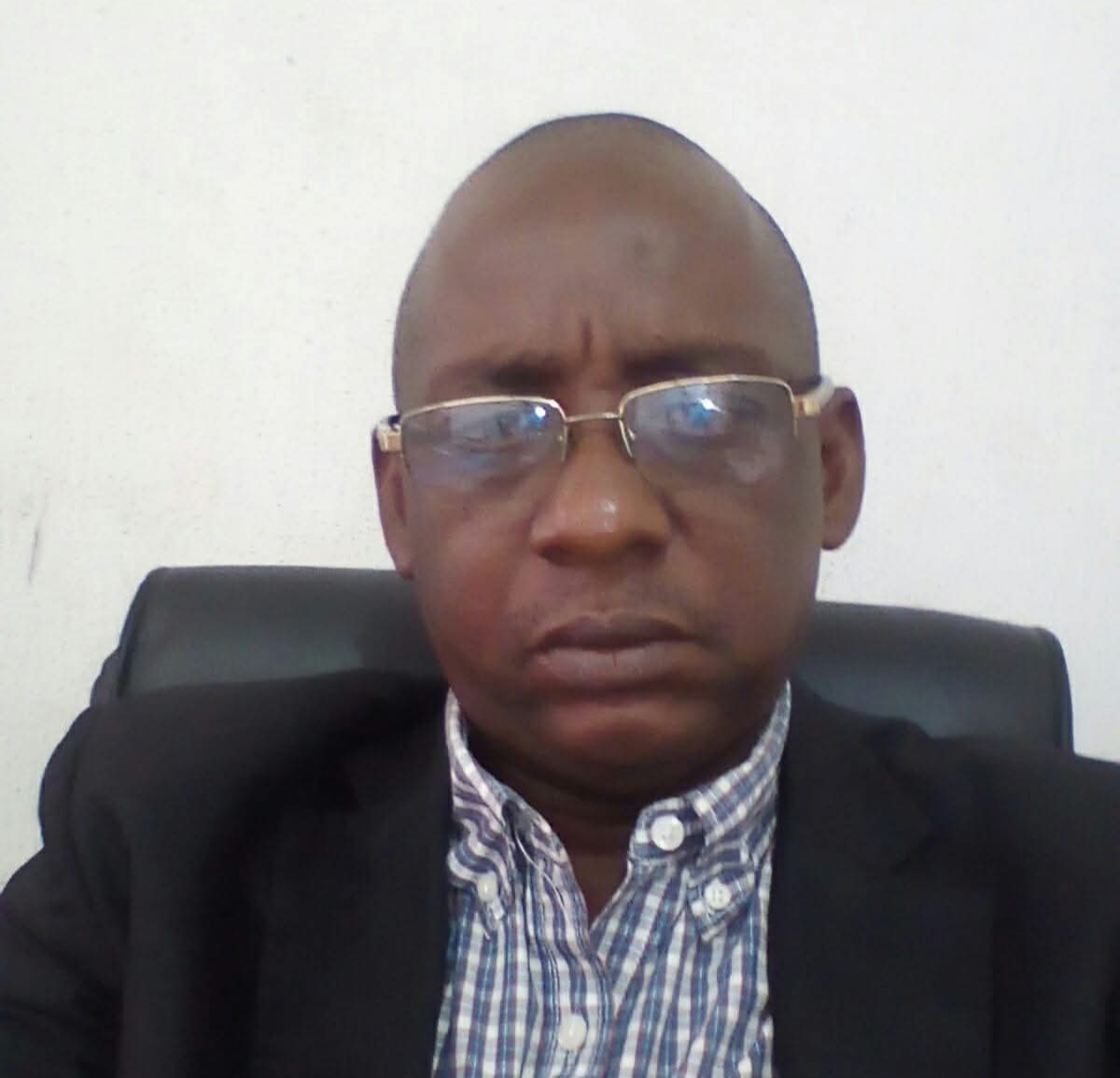
The Chancellor, International Society for Social Justice and Human Rights ( ISSJHR), Dr. Omenazu Jackson has opined that the Nigerian government’s response, official denial and statistics on the issue of Christian genocide was designed to protect the guilty.


Dr. Jackson made this known in a statement circulated to media houses in Port Harcourt, on Friday.
The statement read, “Nigeria stands today at a moral crossroads. The once-proud giant of Africa has become a land where life is cheap, blood flows freely, and the silence of leadership has become an accomplice to terror. From Benue to Plateau, Nasarawa to Southern Kaduna, the cries of men, women, and children echo through burnt villages and abandoned farmlands.
“What we face is not mere insecurity — it is a humanitarian tragedy, a religious persecution, and a national disgrace sustained by official complicity and the cowardice of the political class.
” The killings of Christians across the North-Central region of Nigeria have reached genocidal proportions. Yet, the government hides behind euphemisms like “banditry” and “farmer-herder clashes,” as though human life were a policy inconvenience.
“Every leader who swore to protect this nation but failed to act against this slaughter carries moral blood on his hands. The complicity is not only in silence but in the deliberate distortion of truth. When Benue villages were razed and more than forty people killed in one weekend, the state blamed “unknown gunmen.” When hundreds were massacred in Plateau, the official response was “communal conflict.”
“This denial has become state policy. It is cowardice masquerading as diplomacy. Nigeria’s refusal to acknowledge the religious dimension of these killings betrays a deeper rot — a leadership more interested in protecting image than protecting lives.
*“Any government that fails to protect her citizens and her territorial integrity has lost the right of legitimacy. Sustaining such government through vicious propaganda and diplomatic ground-standing is an act of official criminal boldness”*
“According to Intersociety (August 2025), over 7,000 Christians have been killed in the first 220 days of 2025 — an average of 32 deaths per day. Since 2009, more than 185,000 Nigerians, including about 125,000 Christians, have lost their lives to jihadist-linked or communal attacks.
“The dead are not numbers. They are farmers, teachers, mothers, and children — erased while the state watches. Leadership complicity is the gravest betrayal of a nation’s soul.
“This is more than communal violence; it is a systematic assault on Christian identity and faith. Data from the Observatory for Religious Freedom in Africa shows that between 2019 and 2023, 16,769 Christian civilians were killed compared to 6,235 Muslims in jihadist or communal attacks. In the North-Central alone, the disparity is even worse — Christians are nearly three times more likely to be victims.
“The destruction of over 19,000 churches in the past decade — an average of 100 churches attacked each month — reveals a pattern that cannot be ignored. These are not random killings. They are orchestrated terror campaigns aimed at erasing a people’s faith, farms, and future.
“The Nigerian government’s response? Official denial, misdirection, and statistics designed to protect the guilty.
“By refusing to call these acts what they are — genocide and religious persecution — Nigeria insults the memory of the dead and mocks the conscience of humanity.
“Nigeria’s military budget tells its own story of misplaced priorities and compromised intent. Despite a defence allocation of ₦3.1 trillion in 2025, representing just 5.6% of the national budget, insecurity has worsened across every region.
“The Defence Minister himself admitted that the ₦50 billion budgeted for defence operations was “grossly inadequate,” while barracks across the country received zero allocations for renovation.
” Meanwhile, the ₦595 billion allocated to intelligence operations — the very sector that could track and prevent attacks — is a drop in the ocean compared to the scale of the crisis.
“Billions have been spent, yet the terror persists. Our soldiers are brave, but they are poorly equipped, often unpaid, and sometimes deployed under political constraints that forbid decisive engagement. The elites are secure behind bulletproof walls and foreign escorts, while the poor in Guma, Bokkos, Mangu, and Kaura are slaughtered with impunity.
“This is not failure by accident; it is failure by design — a system that thrives on insecurity because chaos sustains corruption.
“The world has now taken notice. The U.S. President Donald Trump recently warned that America “might go in guns blazing” if the Nigerian government fails to stop the massacre of Christians. His statement, though blunt, exposed what Nigerian diplomacy has tried desperately to hide: that the world now views Nigeria as a nation complicit in its own humanitarian collapse.
“Instead of introspection, the government responded with denial — calling it “foreign interference.” What a blunder! When a state loses its moral legitimacy before the world, it loses the very essence of sovereignty. Diplomacy cannot be built on denial when humanity is burning.
“The international press — The Guardian, New York Post, AP News, among others — have all documented the killings in Benue, Plateau, and other flashpoints. Nigeria’s image as a responsible state is collapsing before the eyes of the world.
“The crisis in Nigeria has reached a tipping point that demands urgent global action.
“Humanity is on trial: With over 7,000 Christians killed this year alone and villages wiped out daily, silence has become complicity.
“Regional stability is threatened: Nigeria’s disintegration through faith-based conflict will destabilize all of West Africa. Refugees, famine, and jihadist expansion will follow.
“A moral responsibility: When a state refuses to protect its own citizens, the world has a duty to protect. The doctrine of “Responsibility to Protect” (R2P) was created for moments like this.
“Insecurity in Nigeria threatens Africa’s largest economy and global energy supply. The destruction of rural farming communities — especially in the Middle Belt, Nigeria’s food basket — poses a continental hunger risk.
“The United Nations, African Union, and International Criminal Court must investigate state complicity, hold perpetrators accountable, and establish protection corridors for threatened communities.
“The international community must not wait until Nigeria becomes another Rwanda. Silence today will echo in the graves of tomorrow.
“Our nation’s tragedy is not just in the blood that flows, but in the humanity we have lost. Nigeria has become a paradox — rich in religion, poor in righteousness; loud in prayer, silent in justice.
“Our elites live in luxury while our villages burn. Our leaders seek foreign applause while our people cry for local protection. Our military salutes at ceremonies but bleeds in the field without purpose.
“The time has come for Nigerians to rise above ethnic and religious walls and demand a leadership that values life over politics. The world must stand with us now — not tomorrow — to save humanity within Nigeria’s borders before the soil becomes a graveyard of conscience.
“When history recalls this era, it will not remember how many bridges we built or how many elections we conducted — it will remember how we watched our people slaughtered and did nothing.
“Nigeria’s leadership has become a tragedy of convenience; its elites, prisoners of wealth; its diplomats, architects of denial. The jihadists are not just killing bodies — they are killing the soul of a nation.
“We must restore that soul through truth, justice, and love — for the web of humanity is indeed one inseparable basket. If Nigeria burns, humanity will feel the heat”.