


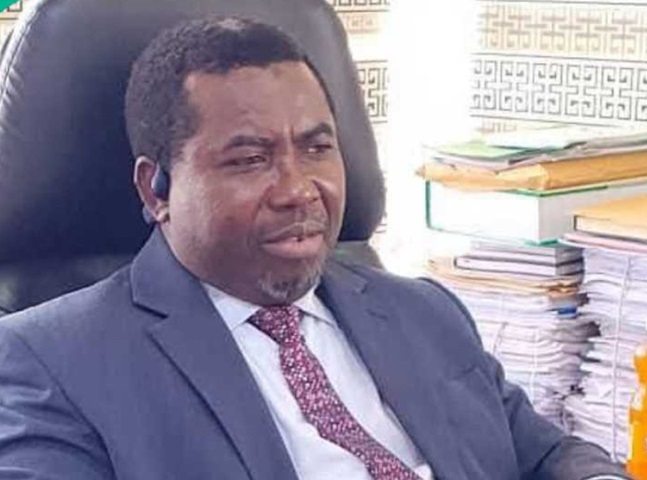
The Christian Association of Nigeria (CAN) in the 19 Northern states and the Federal Capital Territory (FCT) has thrown its weight behind the Chairman of the Independent National Electoral Commission (INEC), Professor Joash Amupitan following calls by the Supreme Council for Shari’ah in Nigeria for the INEC’s boss removal over his legal report on Christians genocide in Nigeria.


In a statement in reaction to the call, on Thursday, the Christian body described the demand as an attempt to politicise religion and undermine a key national institution.
The statement jointly signed by the Chairman of Northern CAN, Rev. Joseph John Hayab, and its Secretary-General, Bishop Mohammed Naga, questioned the motive behind the demand, asking who was sponsoring the call and why such interests were being pursued under the platform of a religious organisation?
It cautioned that using religion as a basis for questioning the integrity of public office holders was dangerous and capable of inflaming sectarian tensions.
According to the statement , Professor Amupitan, like every Nigerian, has a constitutional right to freedom of religion, and expressing concern about challenges faced by one’s faith does not automatically amount to bias or disqualification from public service.
It noted that several Muslims had previously occupied sensitive national positions, despite being publicly associated with religious causes, without facing similar scrutiny, and urged Nigerians to focus on competence, integrity and national interest rather than religious affiliation.
It expressed concern that the controversy reinforces longstanding complaints of religious discrimination against Christians, particularly in appointments to strategic national offices.
It recalled that the two immediate past INEC chairmen were Muslims from Northern Nigeria and warned against narratives suggesting that leadership of the electoral body should be restricted to adherents of a particular religion.
“Anyone hiding under the guise of a religious council to demand the removal of the INEC chairman for political or sectarian reasons should come out openly,” the statement said, adding that competence, not faith, should remain the benchmark for public office.
The Christian body commended President Bola Ahmed Tinubu for appointing a Christian as INEC chairman, describing the decision as a demonstration of inclusivity and national unity.
It also referenced the precedent set by former President Goodluck Jonathan, who retained a northern Muslim as INEC chairman, despite political pressure at the time.
The statement advised the Shari’ah Council to clearly identify any individual or group behind the campaign against the INEC chairman, warning that religious platforms should not be used as cover for political interests or to intimidate public officials.
It also urged Professor Amupitan not to be distracted by the controversy, but to remain focused on his constitutional mandate to conduct free, fair and credible elections.
“He should concentrate on doing what is right for Nigerians and not be drawn into distractions capable of undermining public confidence in the electoral process,” the statement said.
Meanwhile, Northern CAN raised concerns over what it described as emerging signals of a coordinated political agenda ahead of the 2027 general election.
It cited recent comments attributed to the Minister of Culture, Tourism and Creative Economy, Hannatu Musawa, suggesting that the All Progressives Congress (APC) could risk electoral defeat if it abandons a Northern Muslim-Muslim ticket for President Bola Ahmed Tinubu’s re-election bid.
According to the association, when viewed alongside sustained criticism of a Christian INEC chairman, such statements raise questions about whether there is a broader effort to weaken Christian confidence and participation in the political process.
The Christian body warned against framing Nigeria’s political future strictly along religious lines, stressing that democracy should be driven by competence, equity and national cohesion rather than sectarian considerations.
The group cautioned that any attempt to narrow political leadership to a particular faith or region could deepen divisions and threaten the country’s fragile unity.